
Psychology is the scientific study of the mind and behavior. It’s dedicated to understanding why people think, feel, and act the way they do, covering everything from the biological workings of the brain to complex social interactions.
Wilhelm Wundt
(1832–1920)
Wilhelm Wundt often considered the "Father of Experimental Psychology." He established the first formal psychology lab in Leipzig, Germany, in 1879, marking the start of psychology as a separate scientific discipline. His school of thought, Structuralism, focused on breaking down mental processes into their most basic components using a method called introspection.
Ivan Pavlov
(1849–1936)
A Russian physiologist known for his discovery of Classical Conditioning through his famous experiments with dogs. He demonstrated that a neutral stimulus could become associated with an unconditioned stimulus to produce a conditioned response, establishing a fundamental principle of associative learning in the field of Behaviorism.
(1896–1980)
A Swiss psychologist who focused on Cognitive Development in children. He proposed a theory that children progress through four distinct, universal stages of intellectual development, from infancy to adolescence, detailing how they construct a mental model of the world (schemas).
Sigmund Freud
(1856–1939)
Sigmund Freud is the founder of Psychoanalysis. His theories emphasized the profound influence of the unconscious mind on human behavior. Key concepts include the psychic apparatus (id, ego, and superego), psychosexual stages of development, and the use of talk therapy (free association) to uncover repressed memories and desires.
B.F. Skinner
(1904–1990)
A leading figure in Behaviorism. He developed the concept of Operant Conditioning, which shows that behavior is determined by its consequences—reinforcements make a behavior more likely to occur, while punishments make it less likely. His work focused on the experimental analysis of behavior, often using a "Skinner box."
(1902–1987)
A founder of the Humanistic school of thought, he emphasized personal growth and the potential for good in all people. He developed Client-Centered Therapy, stressing the importance of a supportive environment characterized by unconditional positive regard, empathy, and congruence (genuineness) for individuals to achieve self-actualization.
Here Is Your Psychological Cure
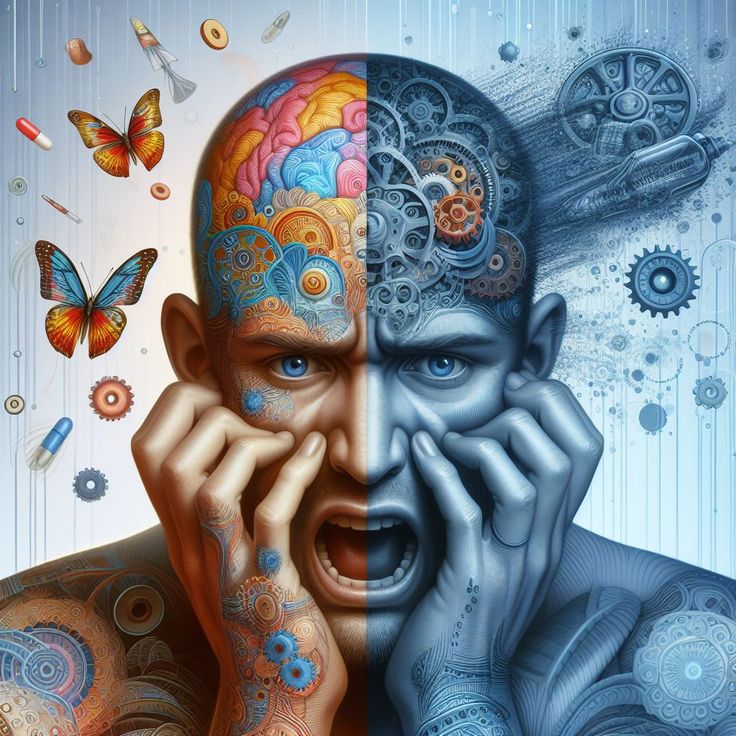
Mental disorders should not be viewed as problems; rather, they are conditions that individuals navigate amidst societal stereotypes. It is essential to recognize that it is not the fault of those who experience these conditions. Often, societal norms and expectations can contribute to an individual’s struggles. As professionals, we have a responsibility to advocate for those facing challenges in their daily lives. Together, we can support and empower individuals, helping them thrive despite the obstacles they encounter.
Psychological Disorders
- Personality Disorder
- Neuro Developmental Disorder
- Schizophrenia Spectrum And Other Psychotic Disorder
- Bipolar And Related Disorder
- Depressive Disorder
- Anxiety Disorder
- Obsessive Compulsive And Related Dsorders
- Trauma And Stress Related Disorders
- Dissociative Disorder
- Feeding And Eating Disorder
- Substance Related And Addictive Disorder
FAQ
1. What are psychological disorders?
Psychological disorders also called mental health disorders; are conditions that affect thoughts, emotions, or behaviors in ways that cause distress or interfere with daily life. They include conditions such as anxiety disorders, mood disorders, trauma-related disorders, and more.
2. How are psychological disorders diagnosed?
Diagnosis is performed by licensed mental-health professionals; such as psychologists, psychiatrists, or clinical social workers using interviews, assessments, and standardized criteria. Online information can be helpful, but it cannot replace a professional evaluation.
3. How can I help someone who is struggling?
Offer support without judgment, listen to their feelings, encourage them to seek professional help, and avoid trying to diagnose them yourself. If there is potential danger to themselves or others, contact local emergency services.
4. Where can I find professional help?
You can reach out to licensed therapists, psychologists, psychiatrists, or community mental-health centers. Many areas also offer hotlines for emotional support. If you’re in immediate danger or experiencing a crisis, contact your local emergency services.
5. Are online mental-health resources reliable?
Many reputable organizations offer helpful information, but not all websites are accurate. Always rely on information from licensed professionals, official health organizations, or trusted mental-health institutions.
6. Can psychological disorders be treated?
Yes. Many mental-health conditions are highly treatable. Treatment may include therapy, lifestyle changes, support systems, and in some cases medication prescribed by a psychiatrist. The right treatment varies by individual.